Preprint
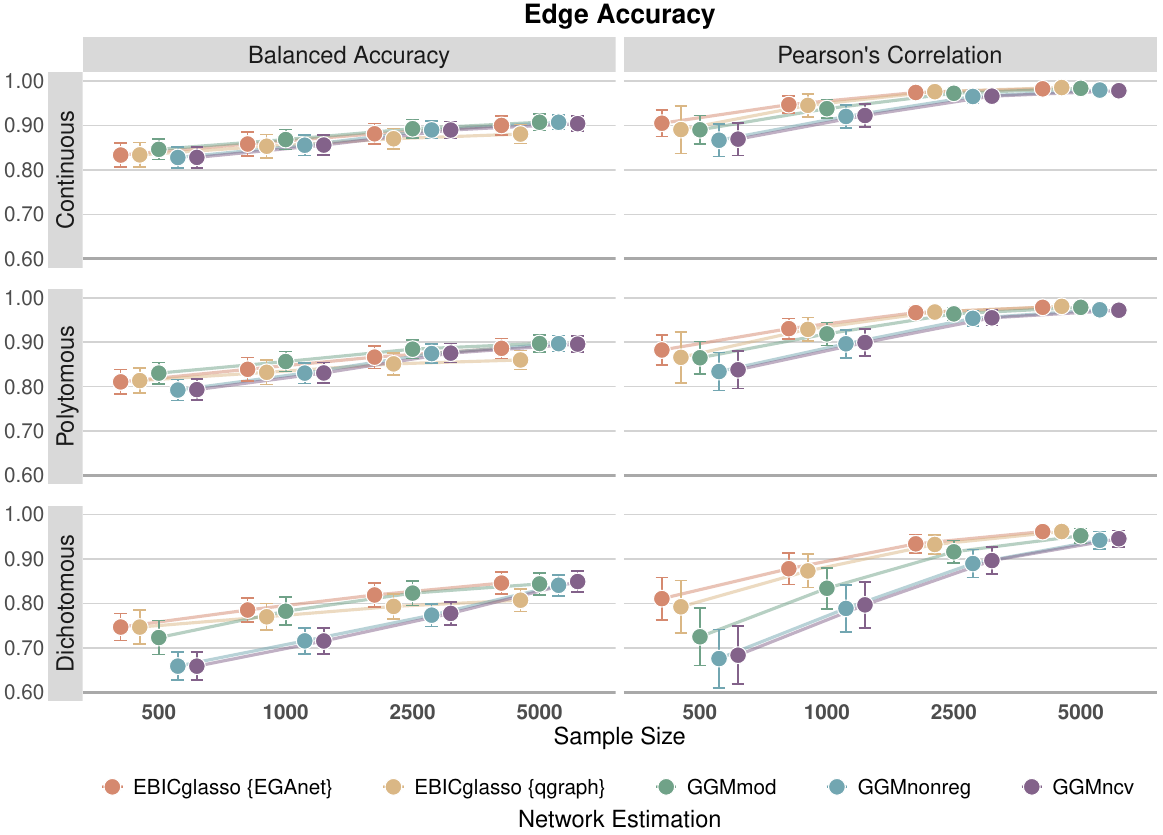
Network accuracy across local, mesoscale, and global structures using Stochastic Block Models
PsyArXiv
Read PaperNetwork psychometrics reconceives psychological constructs as complex and dynamic systems emerging from interactions between variables
Aims
Build a psychometrics that matches the complexity of psychology – moving from variables as mirrors of latent causes to actors in dynamic, interacting systems.
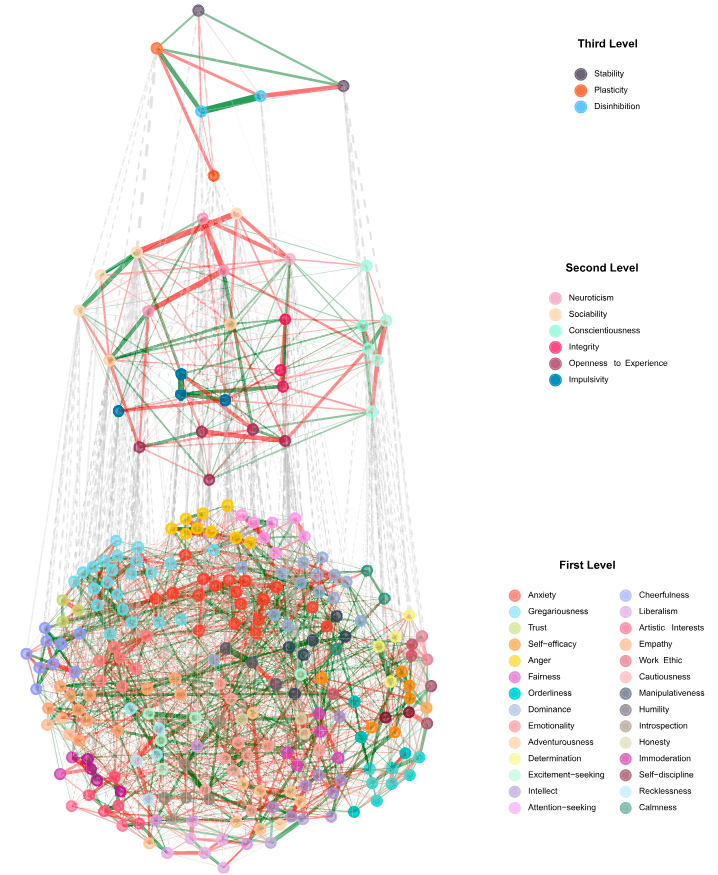
Model personality and psychopathology constructs as complex, dynamic systems that emerge from interactions between variables – not passive reflections of hidden latent causes.
Develop and validate network-based approaches to estimation, dimensionality, item selection, and construct validity – grounded in statistical theory and stress-tested via large-scale Monte Carlo simulation.
Translate methods into freely available R software packages – enabling researchers everywhere to apply state-of-the-art network psychometric techniques to their own data.
Approach
Our toolkit spans dimensionality assessment, structural modeling, and generative AI — all grounded in the mathematics of networks and validated through large-scale simulation.
A network-based framework for estimating the number of dimensions in multivariate psychological data, using community detection on regularized partial correlation networks.
A resampling framework that evaluates the structural stability and generalizability of EGA-estimated dimensions, quantifying confidence in the number and content of communities.
Loading analogs derived directly from network topology, offering insights into how much nodes contribute to the emergence of coherent dimension.
An information-theoretic fit index evaluating how well a proposed dimensional structure accounts for the number and content of dimensions in the observed data, applicable across SEM, factor, and network frameworks.
An extension of EGA to time-series and intensive longitudinal data, recovering idiographic psychological structures that evolve dynamically within individual people over time.
Research
PsyArXiv
Read Paper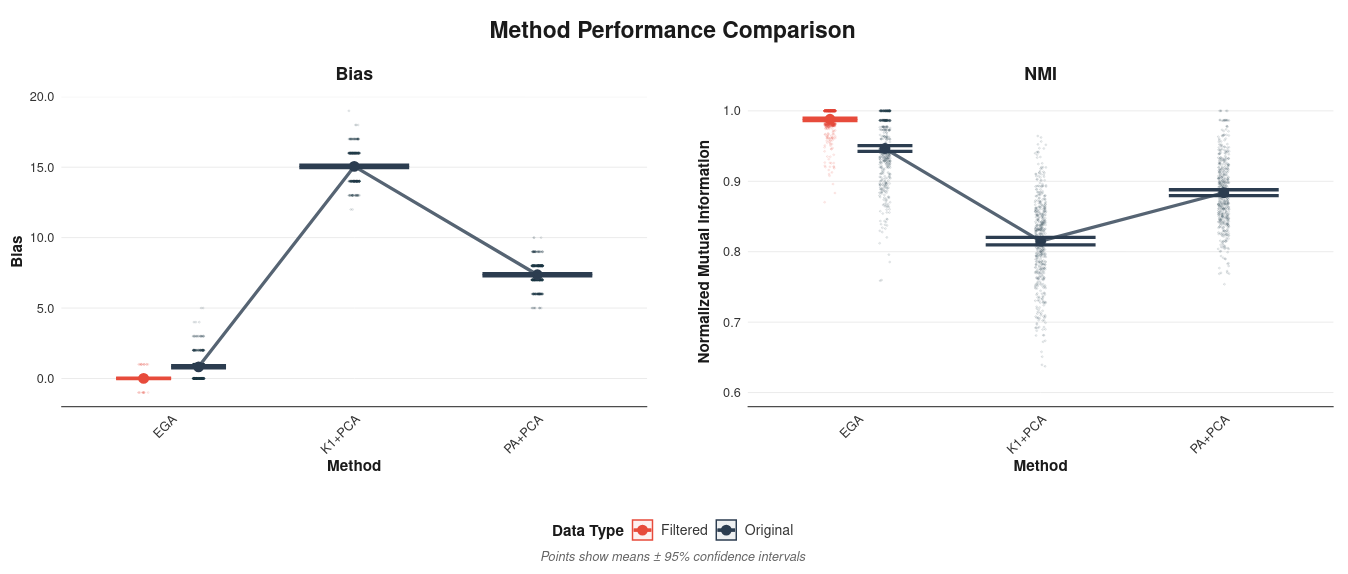
PsyArXiv
Read Paper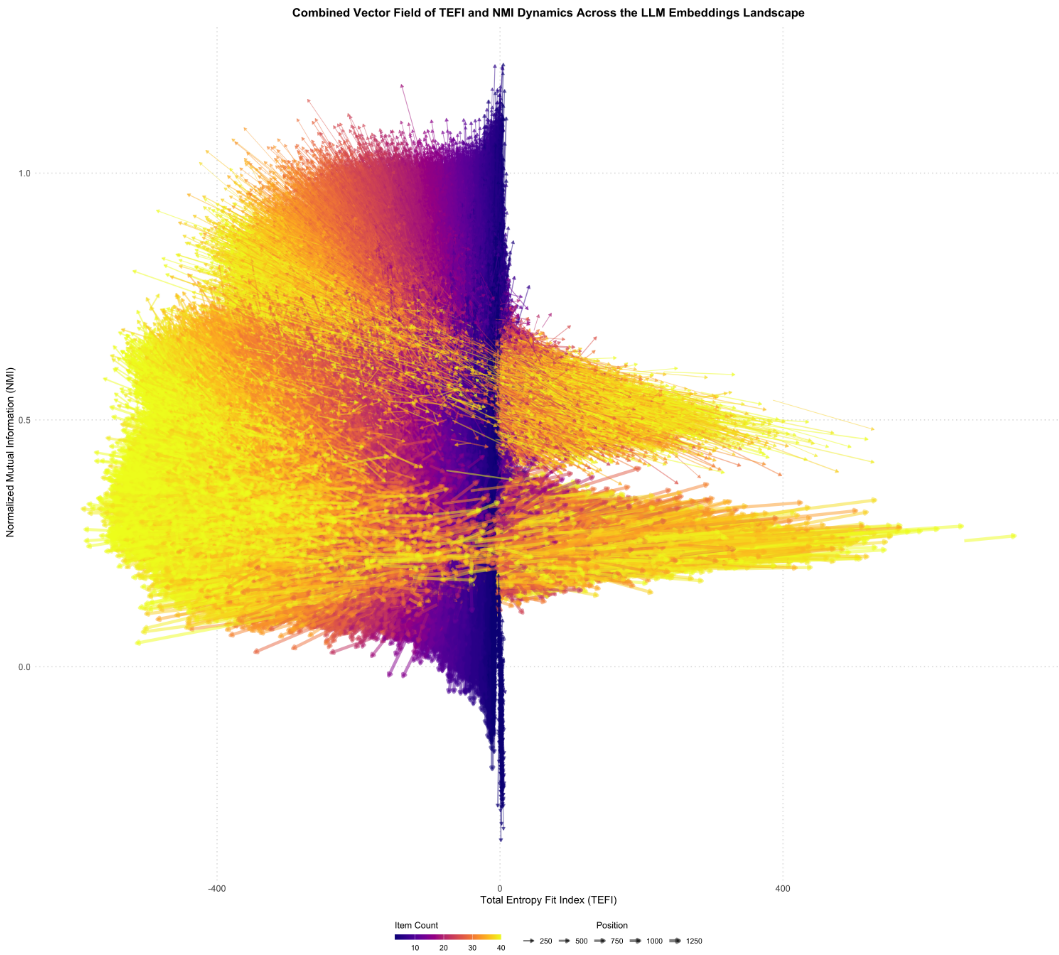
arXiv
Read Paper